
Earnest Money vs. Option Money: Protect Yourself Before You Buy

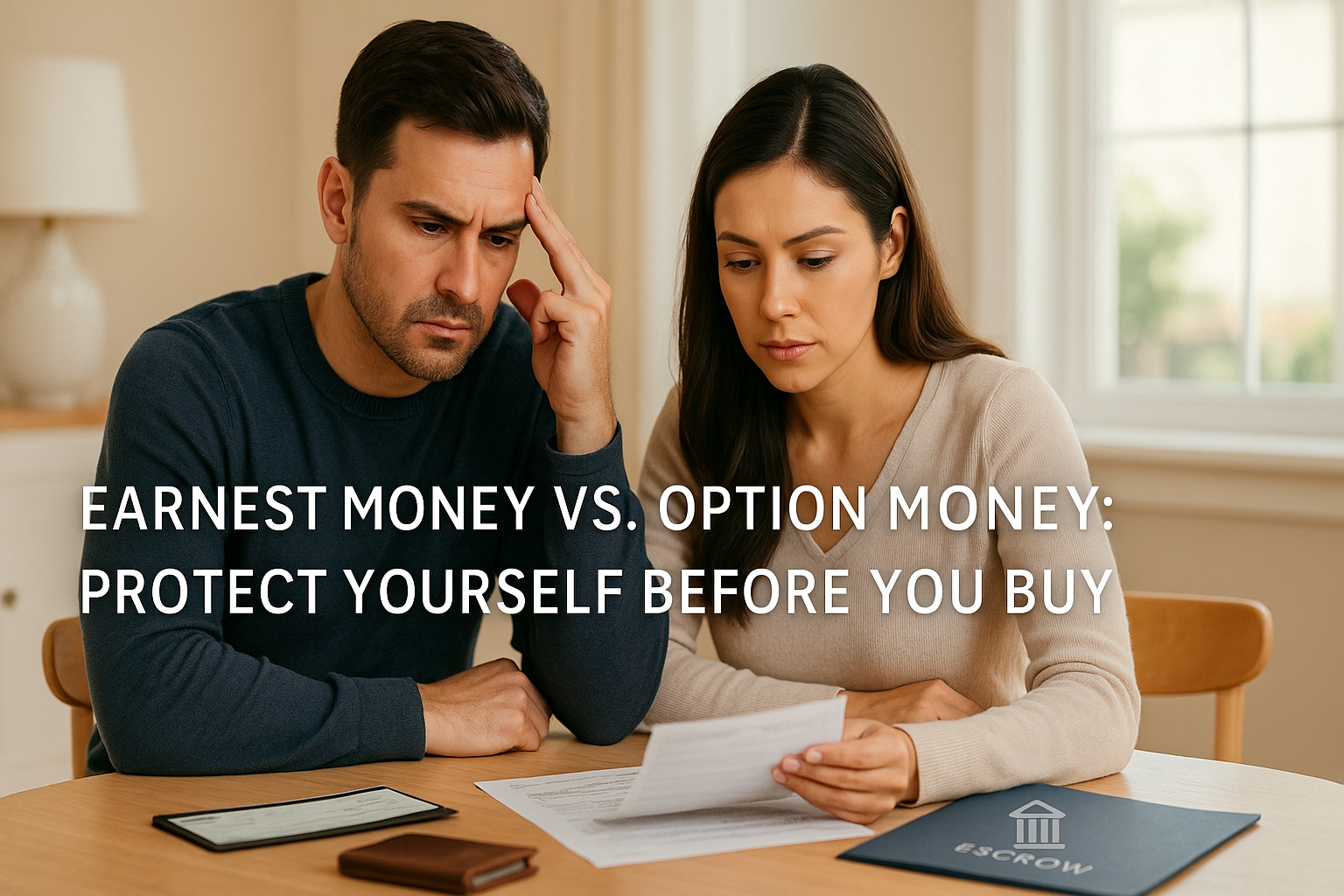
When you're buying a home, you’re not just signing paperwork—you're investing real money from day one. That’s why it’s critical to understand the difference between earnest money and option money, and how both protect you during the buying process.
They serve different roles—but only one of them gives you time to fully investigate the home before you're locked in.
Let’s break it down.
What Is Earnest Money?
Earnest money is your financial commitment to the deal. It shows the seller you're serious and gives them a reason to take the property off the market.
-
Typically 1–2% of the home’s price
-
Paid within a few days of going under contract
-
Held by the title company (not the seller)
-
Credited back to you at closing—if you fulfill the terms of your contract
⚠️ But if you back out of the deal for a reason not covered in the contract, you could lose it. This includes missing your financing deadline, waiving inspections, or simply changing your mind after your protection periods have expired.
What Is Option Money?
Option money is what buys you time to think—and to make sure the home is really worth your investment.
-
It’s a small amount (usually $100–$300)
-
Paid directly to the seller
-
Gives you a defined time frame (commonly 5–10 days) to do inspections, negotiate repairs, or walk away
-
If you proceed, it gets credited toward your closing—just like earnest money
✅ Here’s the kicker: If something’s wrong with the home—foundation, roof, mold, HVAC—you can back out for any reason during the option period and get your earnest money back.
Why You Always Want an Option Period
Even in a competitive market, giving up your option period is risky. Without it:
-
You can’t negotiate for repairs
-
You might discover major issues after your earnest money is locked in
-
You're effectively buying the home as-is
This short window is your time to bring in a trusted home inspector, ask the hard questions, and make decisions based on facts—not just pretty pictures or listing hype.
Let’s Talk Appraisals Too (Especially VA & FHA)
You may have heard that appraisals are for the lender—and that’s true. But for VA and FHA loans, the appraisal actually helps protect the buyer too.
If the home doesn’t appraise for the full contract price:
-
You’re not required to pay the difference
-
You can negotiate the seller down to the appraised value
-
It keeps you from overpaying for something that doesn’t hold its market value
Appraisals protect the investment value of the home. Option periods protect the condition and safety of the home.
Earnest Money = Your Commitment
Option Money = Your Protection
Here’s the truth:
-
Earnest money shows the seller you're serious—but once it's deposited, it’s only protected by the contract’s terms.
-
Option money is your only real buffer to investigate, inspect, and negotiate.
Skipping your option is like buying a car without test-driving it. Don’t do it.
Final Thoughts from Your Realtor®
As your agent, I don’t just open doors—I make sure you don’t walk into something unexpected. That’s why I always:
-
Negotiate a strong option period for every client
-
Make sure inspections are scheduled immediately
-
Review every report and help you advocate for the repairs you deserve
Buying a home in Texas? These small deposits carry major weight—and I’m here to make sure they’re used to protect you.
Want to talk through your contract before you sign?
Send me a message that says "DUE DILIGENCE" and I’ll walk you through it, start to finish.
Categories
Recent Posts








Leave a reply